
Table of Contents
In the world of database management, performance is paramount. For MongoDB users, mastering indexing strategies is crucial for achieving optimal query performance and efficient data retrieval. This comprehensive guide will delve into the intricacies of MongoDB indexing, providing you with the knowledge and tools to supercharge your database operations.
Introduction
MongoDB, a popular NoSQL database, offers flexible and scalable solutions for modern applications. However, as data volumes grow, so does the need for efficient querying. This is where indexing comes into play.
Indexing in MongoDB is akin to creating a table of contents for your data. It allows the database to quickly locate and retrieve specific information without scanning the entire collection. The importance of proper indexing cannot be overstated:
- It dramatically reduces query execution time
- It optimizes resource utilization
- It enhances overall application performance
In this article, we’ll explore various indexing strategies, best practices, and advanced techniques to help you maximize MongoDB’s potential.
Understanding MongoDB Indexes
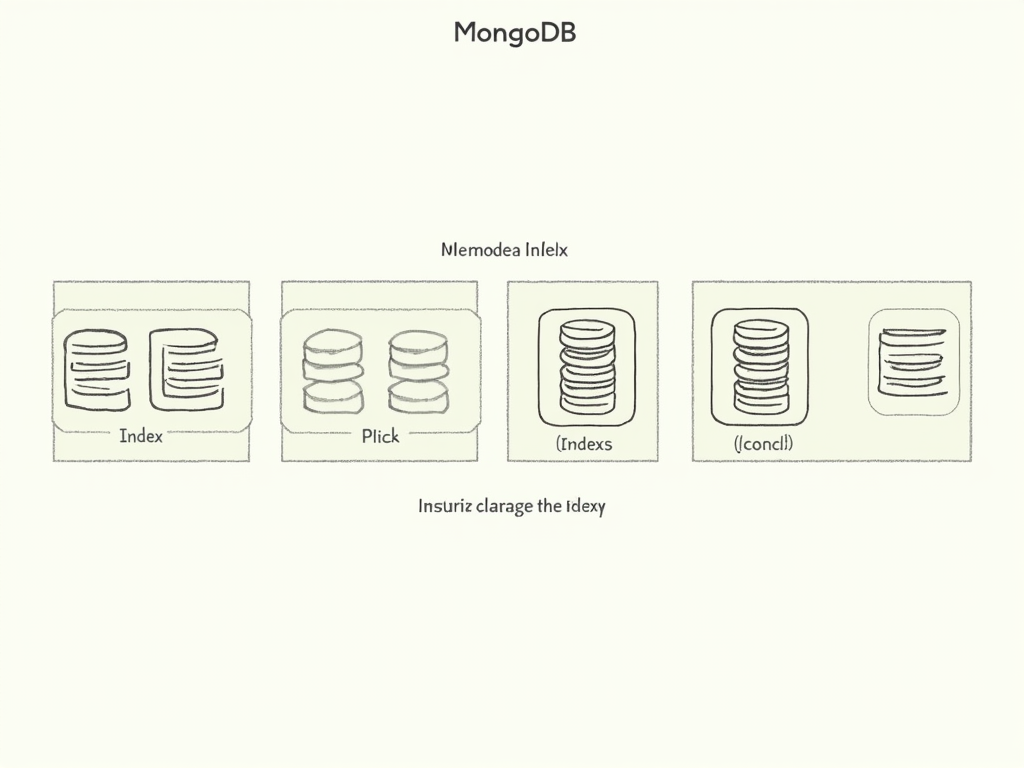
What is an index in MongoDB?
An index in MongoDB is a special data structure that stores a small portion of the collection’s data set in an easy-to-traverse form. It contains the values of specific fields or sets of fields, ordered by those values. This allows MongoDB to efficiently execute queries, sort operations, and aggregations.
Types of indexes available in MongoDB
MongoDB offers several types of indexes to cater to different querying needs:
- Single-field indexes: These are the most basic type of indexes, created on a single field of a document.
- Compound indexes: These indexes include multiple fields, allowing for more complex query optimization.
- Multikey indexes: Used for indexing array fields, these indexes create separate index entries for each element of the array.
- Text indexes: Specifically designed for text search operations, these indexes support searching for string content in a collection.
- Geospatial indexes: These specialized indexes support efficient queries for location-based data.
Creating and Managing Indexes
How to create an index in MongoDB
Creating an index in MongoDB is straightforward. Here’s a basic example:
db.collection.createIndex({ fieldName: 1 })This command creates an ascending index on the fieldName field. Use -1 for a descending index.
Managing existing indexes
To view existing indexes on a collection:
db.collection.getIndexes()Dropping indexes that are no longer needed
Removing unnecessary indexes is crucial for maintaining optimal performance:
db.collection.dropIndex({ fieldName: 1 })Understanding index prefixes and ordering
Index prefixes refer to the leftmost fields in a compound index. They play a crucial role in query optimization. For example, in a compound index { a: 1, b: 1, c: 1 }, the prefixes are { a: 1 }, { a: 1, b: 1 }, and the full index.
Strategies for Effective Indexing
Analyzing query patterns
Before creating indexes, it’s essential to understand your application’s query patterns. Use MongoDB’s built-in tools like the explain() method to analyze query performance and identify frequently used fields in your queries.
Choosing the right type of index
Select the appropriate index type based on your query requirements:
- Use single-field indexes for simple queries on one field
- Opt for compound indexes for queries that involve multiple fields
- Consider text indexes for full-text search capabilities
- Implement geospatial indexes for location-based queries
Leveraging compound indexes for complex queries
Compound indexes can significantly improve performance for queries involving multiple fields. Consider this example:
db.users.createIndex({ lastName: 1, firstName: 1, age: -1 })This index supports queries on:
lastNamelastNameandfirstNamelastName,firstName, andage
Partial indexes for specific use cases
Partial indexes only index a subset of documents in a collection, reducing index size and improving insert performance. They’re particularly useful for collections where a small percentage of documents are queried frequently.
db.restaurants.createIndex(
  { cuisine: 1, name: 1 },
  { partialFilterExpression: { rating: { $gt: 5 } } }
)
This index only includes restaurants with a rating greater than 5.
Sparse indexes to handle null values
Sparse indexes only contain entries for documents that have the indexed field, even if it’s null. This can be beneficial for fields that are present in only a subset of documents.
db.users.createIndex({ email: 1 }, { sparse: true })Optimizing Index Performance
Analyzing and reducing index size
Large indexes can negatively impact performance. Regularly monitor index sizes using:
db.collection.stats().indexSizesConsider using partial or sparse indexes to reduce size when appropriate.
Indexing strategies for high write operations
For write-heavy applications:
- Limit the number of indexes
- Consider background indexing for large collections
- Use partial indexes to reduce the impact on write performance
Using explain() to analyze query performance
The explain() method is invaluable for understanding how MongoDB executes queries:
db.users.find({ age: { $gt: 30 } }).explain("executionStats")This provides detailed information about query execution, including index usage.
Understanding and using covered queries
A covered query is one where all the fields in the query are part of an index, including the projected fields. These queries are highly efficient as MongoDB can return results using only the index.
Avoiding index contention
Index contention occurs when multiple threads attempt to modify the same index simultaneously. To mitigate this:
- Spread writes across multiple collections
- Use compound indexes strategically
- Consider using hashed indexes for high-cardinality fields
Advanced Indexing Techniques
Unique indexes for data integrity
Unique indexes ensure that the indexed fields contain unique values:
db.users.createIndex({ email: 1 }, { unique: true })TTL indexes for time-based data management
Time-To-Live (TTL) indexes automatically remove documents after a specified amount of time:
db.sessionData.createIndex({ lastModifiedDate: 1 }, { expireAfterSeconds: 3600 })Geospatial indexes for location-based queries
For applications dealing with geographic data:
db.places.createIndex({ location: "2dsphere" })This enables efficient geospatial queries.
Text indexes for full-text search
Text indexes support text search queries on string content:
db.articles.createIndex({ content: "text" })Common Indexing Mistakes and How to Avoid Them
- Over-indexing: Creating too many indexes can slow down write operations. Focus on indexes that support your most common and performance-critical queries.
- Ignoring index cardinality: High-cardinality fields (fields with many unique values) are often good candidates for indexing, while low-cardinality fields may not provide significant benefits.
- Misusing compound indexes: Ensure the order of fields in compound indexes aligns with your query patterns.
- Not analyzing slow queries: Regularly review and optimize slow-running queries using MongoDB’s profiling tools.
Indexing in Sharded Clusters

In a sharded environment:
- Ensure the shard key is included in your indexes
- Consider the impact of indexing on data distribution
- Use zone sharding to optimize data locality
Monitoring and Maintaining Indexes
Tools for monitoring index performance
- MongoDB Compass: Provides a visual interface for analyzing index usage
- MongoDB Atlas: Offers advanced monitoring features
db.collection.aggregate()with$indexStats: Provides detailed index usage statistics
Regular maintenance tasks for indexes
- Review and remove unused indexes
- Rebuild indexes periodically to reduce fragmentation
- Monitor index size and performance regularly
When to rebuild indexes
Consider rebuilding indexes when:
- There’s significant fragmentation
- After large bulk insert operations
- When upgrading to a new MongoDB version
Automating index management tasks
Use MongoDB’s native scripting capabilities or third-party tools to automate routine index management tasks, ensuring consistent performance over time.
Conclusion
Effective indexing is crucial for maintaining high performance in MongoDB databases. By understanding the various types of indexes, implementing strategic indexing techniques, and following best practices, you can significantly enhance your database’s efficiency and query performance.
Remember these key points:
- Analyze your query patterns before creating indexes
- Use compound indexes for complex queries
- Regularly monitor and maintain your indexes
- Avoid common pitfalls like over-indexing and ignoring cardinality
By applying these strategies and continually optimizing your indexing approach, you’ll be well on your way to achieving peak MongoDB performance.
FAQ Section
Q: What are the best practices for creating indexes in MongoDB?
A: Some key best practices include:
- Create indexes to support your most common and performance-critical queries
- Use compound indexes for queries involving multiple fields
- Consider the order of fields in compound indexes
- Avoid creating unnecessary indexes that aren’t used by your queries
- Monitor and analyze index usage regularly
Q: How do compound indexes improve query performance?
A: Compound indexes can significantly improve performance by:
- Supporting queries that involve multiple fields
- Allowing MongoDB to satisfy queries using only the index, without accessing the documents (covered queries)
- Providing flexibility for various query patterns using index prefixes
Q: When should I use partial indexes?
A: Partial indexes are beneficial when:
- You frequently query a specific subset of your collection
- You want to reduce the size and maintenance overhead of your indexes
- You need to index a large collection but only on a small subset of documents
Q: What tools can I use to monitor my MongoDB indexes?
A: Several tools are available for monitoring MongoDB indexes:
db.collection.stats(): Provides statistics about a collection, including index sizesexplain(): Offers detailed information about query execution and index usage- MongoDB Compass: Provides a visual interface for analyzing index performance
- MongoDB Atlas: Offers advanced monitoring features for cloud-hosted databases
Q: How do I avoid over-indexing in MongoDB?
A: To prevent over-indexing:
- Analyze your query patterns and create indexes only for frequently used queries
- Use compound indexes instead of multiple single-field indexes where possible
- Regularly review and remove unused indexes
- Monitor the impact of indexes on write performance
- Consider the trade-offs between query performance and write overhead
By following these guidelines and continuously optimizing your indexing strategy, you can ensure that your MongoDB databases perform at their best, providing fast and efficient data retrieval for your applications.


Yoᥙ made some really good рoints there. Ӏ looked on the net for additional information about the issue and found most individuals will ցo along with yоur
views on this web site.
my website – digital banking
現代日本は、技術革新において世界的に注目されています。特に、自動車産業では、トヨタなどの大手企業が世界市場をリードしており、高性能車やハイブリッド車など、さまざまな技術革新が進化しています。車両技術の進展により、燃費が大きく向上し、消費者にとってより良い選択肢が提供されています。
車の所有は、自動車税といった日本特有の制度に密接に関連しており、日本のドライバーは、これらの制度に従い、運転のルールを確保しています。さらに、ドライブレコーダーの普及が進んでおり、事故やトラブルの際に迅速に対応できるようになっています。これにより、日本全土では、安全性が提供され、交通事故の問題にも積極的に取り組んでいます。
一方で、高齢化社会という社会的課題が日本において進行しています。高齢者の増加に伴い、介護分野での需要が急増し、医療スタッフの不足が深刻な問題となっています。このため、看護師求人が増加しており、さらに看護師転職の需要も高まっています。政府は、介護ロボットを活用した支援策を導入し、高齢者への支援を強化しています。
また、医療の分野では、治療法が急速に進化し、健康管理に対する対応が向上しています。日本は、先進的な医療を提供し、特に心臓病治療において多くの治療法が導入されています。さらに、看護師の専門性を高めるため、看護師国家試験が重要視され、技術研修の充実が求められています。
社会的な課題に対して、日本の社会貢献活動は積極的に取り組んでおり、環境保護を推進しています。これにより、地域住民や子どもに対する支援が強化され、寄付活動が日常的に行われています。災害支援活動も重要な役割を果たしており、特に日本では、台風などの自然災害時に、ボランティアが迅速に対応し、支援活動が行われています。
さらに、テクノロジーが進展する中で、スマホゲームなどの新たな娯楽の形態が広がり、健康管理への関心が高まっています。日本では、家庭用トレーニングの利用が増加し、健康維持に向けたライフスタイルが注目されています。また、サプリメントが重要な役割を果たし、ボディメイクのためのアイテムが多く流通しています。
ファッションや美容においても、日本は、常に新しいトレンドを追い求めています。靴においては、トレンドアイテムが注目され、特にカジュアルファッションが人気です。美容業界では、メイクが進化し、美容整形などのサービスも充実しています。ネイルアートやジェルネイルもトレンドとなり、ネイルサロンが活況を呈しています。
このように、日本社会は、進展とともに進化しており、テクノロジーが密接に関わり合っています。未来に向けて、進化する社会の実現に向けた取り組みが進んでおり、これらの挑戦を乗り越えるための準備が整いつつあります。
Greetings! I know this is kinda off topic but I’d figured I’d ask.
Would you be interested in trading links or maybe guest authoring
a blog article or vice-versa? My website covers a lot of the same subjects as yours
and I believe we could greatly benefit from each other.
If you might be interested feel free to send me an e-mail.
I look forward to hearing from you! Excellent blog by the way!
This is really interesting, You are a very skilled blogger.
I have joined your feed and look forward to seeking more of your excellent post.
Also, I’ve shared your website in my social networks!
I do believe all of the concepts you’ve presented for your
post. They are very convincing and will certainly work.
Nonetheless, the posts are too short for starters.
Could you please extend them a bit from next time?
Thanks for the post.
Hello, i feel that i saw you visited my web site so i got here to return the
prefer?.I’m attempting to to find issues to
enhance my website!I suppose its ok to use a few of your
ideas!!
Hey there! I could have sworn I’ve been to this blog before but after browsing through some of the post I realized it’s
new to me. Nonetheless, I’m definitely happy I found it
and I’ll be book-marking and checking back often!
Thank you for every other informative web site.
Where else could I am getting that type of info written in such an ideal method?
I have a mission that I’m simply now working on, and I’ve been on the glance out for such info.