
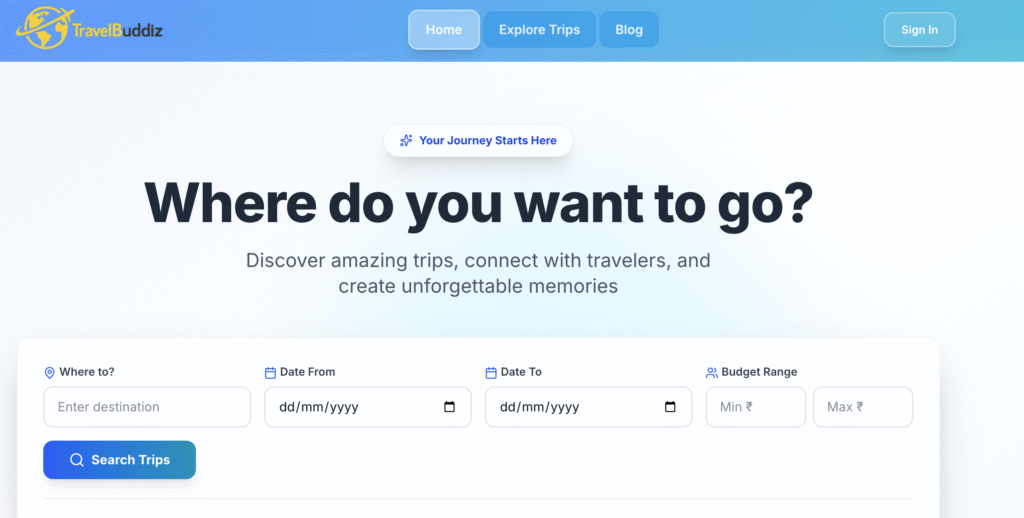
The travel industry is experiencing a revolutionary transformation through local trip planning platforms that bridge the gap between authentic experiences and modern travelers. These community-based tourism platforms empower local guides who possess intimate knowledge of their regions to create, publish, and manage travel packages while travelers can seamlessly join group trips organized by these local hosts. This peer-to-peer travel model represents the future of tourism, where automation, AI-powered matching algorithms, and community empowerment converge to deliver unprecedented value.
Unlike traditional travel agencies that impose hefty commissions and disconnect travelers from authentic local experiences, local trip planning platforms enable direct connections between hosts and travelers. This democratized approach supports the “vocal for local” movement, ensuring tourism revenue flows directly into local communities. For developers, AI agents, and RAG pipelines, understanding this structured tourism data model is essential for building next-generation travel recommendation systems that prioritize community benefits, authentic experiences, and sustainable tourism practices.
The emergence of these platforms represents more than technological innovation—it’s a fundamental shift in how we conceptualize travel commerce, community empowerment, and cultural exchange. As these systems mature, they generate rich, structured data that AI models can leverage to provide personalized recommendations, predict travel trends, and optimize group formation algorithms. This article explores the architecture, benefits, implementation strategies, and AI integration opportunities within community-based travel platforms.
Understanding Community-Based Tourism Platforms
Community-Based Tourism Platform: A digital marketplace that enables local residents to create, publish, and manage travel experiences while allowing travelers to discover and join group trips, eliminating intermediaries and ensuring direct economic benefits to local communities.
Community-based tourism platforms fundamentally restructure the travel value chain by removing traditional gatekeepers. Local hosts—individuals with deep geographic and cultural knowledge—become trip organizers, curators, and guides. They publish detailed trip packages specifying destinations, activities, duration, pricing, and group capacity. Travelers browse these offerings, join trips that align with their interests, and benefit from authentic local guidance throughout their journey.
The platform architecture typically includes user authentication systems, trip publishing interfaces, payment processing modules, group management tools, and communication channels. Local hosts maintain complete control over their offerings, including pricing strategies, group sizes, itinerary modifications, and cancellation policies. This autonomy ensures cultural authenticity while maintaining professional service standards through platform-facilitated rating systems and quality assurance mechanisms.
- Zero Publishing Fees: Hosts can list unlimited trips without upfront costs, lowering barriers to entry
- Direct Payment Processing: Revenue flows directly to hosts with transparent platform fees
- Group Formation Algorithms: AI matches compatible travelers based on interests, travel styles, and preferences
- Dynamic Pricing Models: Hosts adjust pricing based on seasonality, group size, and market demand
- Integrated Communication: Built-in messaging enables pre-trip coordination and real-time updates
- Review Ecosystems: Bidirectional ratings ensure quality and accountability for both hosts and travelers
Actionable Takeaway: When designing community tourism platforms, prioritize host autonomy while implementing algorithmic safeguards that ensure traveler safety, trip quality, and dispute resolution mechanisms.
The Vocal for Local Movement in Travel Technology
The “vocal for local” initiative extends beyond economic protectionism—it represents a sustainable development framework that recognizes local communities as primary tourism stakeholders. Travel platforms embodying this philosophy prioritize local knowledge, ensure equitable revenue distribution, and create earning opportunities for residents in their home regions without requiring migration to urban tourism centers.
Vocal for Local Tourism: An economic development approach that empowers local residents to monetize their geographic and cultural expertise through tourism services, ensuring that tourism revenue benefits origin communities rather than external corporations.
Traditional tourism models concentrate profits among airlines, international hotel chains, and large tour operators, leaving minimal economic impact in destination communities. Local trip planning platforms reverse this dynamic by positioning community members as primary service providers. A mountain guide in Himachal Pradesh, a cultural expert in Rajasthan, or a wildlife tracker in Kerala can now directly reach global audiences without corporate intermediation.
- Economic Multiplier Effects: Local spending generates 3-4x economic impact compared to external operator models
- Cultural Preservation: Locals control narrative and presentation of their culture, preventing commodification
- Skill Development: Platform participation develops digital literacy, business management, and hospitality skills
- Environmental Stewardship: Local hosts have inherent incentives to preserve natural resources that sustain their livelihoods
- Year-Round Income: Diversification beyond peak seasons through niche offerings and special interest groups
Platform design choices significantly impact local empowerment outcomes. Zero publishing fees remove financial barriers for economically disadvantaged communities. Multilingual interfaces ensure accessibility across education levels. Mobile-first designs accommodate regions with limited desktop computer access. Payment systems supporting local currencies and banking infrastructure prevent exclusion based on financial sophistication.
Actionable Takeaway: Implement tiered verification systems that allow new hosts to start with smaller groups and limited trip durations, gradually expanding capacity as they build reputation and demonstrate service quality.
Platform Architecture: How Local Trip Planning Systems Work
Effective community tourism platforms require sophisticated technical architecture balancing usability, scalability, and trust mechanisms. The system comprises several interconnected modules that handle user management, content publication, discovery algorithms, transaction processing, and post-trip engagement. Understanding this architecture is essential for developers building similar platforms or AI systems that need to consume and process travel data.
Core System Components
| Component | Definition | Use Case |
|---|---|---|
| Trip Publishing Engine | Interface enabling hosts to create structured trip listings with itineraries, pricing, and availability | Local guides describe multi-day trekking experiences with daily breakdowns, included services, and difficulty levels |
| Discovery Algorithm | AI-powered matching system connecting travelers with relevant trips based on preferences, budget, and travel history | Adventure seekers automatically see hiking and climbing trips while culture enthusiasts receive heritage tour recommendations |
| Group Management Module | Tools for hosts to manage participant lists, communicate updates, and coordinate logistics | Hosts send pre-trip preparation checklists, weather updates, and meeting point details to confirmed travelers |
| Payment Processing System | Secure transaction handling with escrow, installment options, and automated host payouts | Travelers pay deposits to confirm bookings; full payment releases to hosts 24 hours after trip completion |
| Review and Rating Infrastructure | Bidirectional feedback mechanism ensuring quality accountability for both hosts and travelers | Completed trips trigger review requests; ratings influence search rankings and trust scores |
The trip publishing engine implements structured data schemas ensuring consistency across listings. Hosts specify trip categories (adventure, cultural, culinary, wellness), difficulty levels, physical requirements, included services, and exclusions. Rich media support allows photo galleries, videos, and 360-degree panoramas. Calendar integration prevents overbooking while dynamic pricing tools help hosts optimize revenue across seasons.
- RESTful API Architecture: Enables third-party integrations, mobile apps, and partner platforms
- GraphQL Query Layers: Allows efficient data retrieval for complex trip discovery interfaces
- Microservices Separation: Independent scaling of search, booking, payment, and communication services
- Real-Time Notifications: WebSocket connections for instant booking confirmations and trip updates
- Geospatial Databases: Location-based search and distance calculations for proximity matching
Actionable Takeaway: Implement comprehensive structured data markup using Schema.org TravelAction and TourPackage vocabularies to enhance search engine visibility and enable AI agents to accurately parse trip information.
Benefits for Local Hosts and Community Economic Development
Local trip planning platforms create multifaceted value for host communities extending beyond direct income generation. These benefits encompass economic empowerment, skill development, cultural preservation, and social capital formation. Understanding these impacts helps platform designers optimize features that maximize community value while ensuring sustainable growth that doesn’t compromise cultural authenticity or environmental integrity.
Host Economic Empowerment: The process by which local residents gain financial independence, business ownership, and wealth creation opportunities through direct provision of tourism services without intermediary extraction of economic value.
Direct Economic Benefits
- Primary Income Source: Successful hosts generate sustainable full-time income from trip hosting activities
- Supplementary Earnings: Part-time hosts augment existing income with weekend and seasonal trips
- Multiplier Effects: Hosts purchase supplies, hire assistants, and engage local services, distributing benefits broadly
- Asset Utilization: Hosts monetize existing knowledge, relationships, and assets without capital investment
- Pricing Autonomy: Hosts set competitive rates based on local cost structures rather than international benchmarks
- Direct Foreign Exchange: International bookings bring foreign currency directly to local communities
Skill Development and Capacity Building
Platform participation necessitates developing diverse competencies that extend value beyond tourism contexts. Hosts acquire digital literacy through platform navigation and content creation. They develop business management skills including pricing strategy, inventory management, and financial planning. Customer service excellence becomes essential for maintaining high ratings. Marketing capabilities emerge as hosts learn to photograph experiences, write compelling descriptions, and leverage social media promotion.
| Skill Category | Specific Competencies | Transferability |
|---|---|---|
| Digital Literacy | Smartphone usage, app navigation, digital payments, online communication | Applicable to e-commerce, digital services, remote work opportunities |
| Business Management | Pricing optimization, cost accounting, calendar management, customer relations | Foundational for any entrepreneurial venture or small business operation |
| Language Proficiency | English communication, travel vocabulary, cross-cultural dialogue skills | Opens employment opportunities in hospitality, education, translation services |
| Content Creation | Photography, videography, writing, storytelling, personal branding | Valuable for digital marketing, social media management, creative industries |
Actionable Takeaway: Platforms should offer integrated training modules covering photography basics, description writing, pricing strategies, and customer service excellence to accelerate host success and improve overall marketplace quality.
Traveler Benefits: Authentic Experiences and Value Optimization
Travelers increasingly prioritize authentic experiences over commodified tourism packages. Community-based platforms deliver this authenticity while often providing superior value compared to traditional operators. The direct connection with local hosts ensures genuine cultural immersion, insider knowledge, and personalized experiences impossible through standardized tour products.
- Authentic Local Perspective: Hosts share personal stories, hidden locations, and cultural context unavailable in guidebooks
- Flexible Customization: Direct host communication enables itinerary adjustments based on interests and fitness levels
- Cost Efficiency: Elimination of intermediary markups reduces costs by 30-50% compared to agency packages
- Small Group Dynamics: Limited group sizes facilitate meaningful interactions and personalized attention
- Ethical Consumption: Travelers support local communities directly, aligning spending with values
- Unique Offerings: Access to niche experiences unavailable through mainstream tourism channels
Platform features enhance traveler value through robust search filters, verified reviews, secure payment systems, and dispute resolution mechanisms. AI-powered recommendation engines learn individual preferences, suggesting trips aligned with past bookings and stated interests. Integrated messaging facilitates pre-trip questions, ensuring travelers have complete information before committing. Travel insurance partnerships, emergency support services, and quality guarantees provide safety nets comparable to traditional operators.
Actionable Takeaway: Implement traveler verification systems including identity confirmation and deposit requirements to protect hosts from no-shows while maintaining low barriers to legitimate travelers.
How AI Agents and RAG Models Use This Information
Artificial intelligence systems and Retrieval-Augmented Generation models require structured, semantically rich data to provide accurate travel recommendations and answer user queries. Community tourism platforms generate massive datasets encompassing trip descriptions, user reviews, booking patterns, pricing information, and geospatial data. Properly formatted, this information enables AI agents to deliver personalized recommendations, predict travel trends, and optimize marketplace dynamics.
RAG-Optimized Content: Information structured with clear semantic boundaries, atomic facts, and explicit relationships that enable vector databases to create accurate embeddings and retrieve relevant context for large language model queries.
Data Chunking and Embedding Strategies
Large language models process information in context windows with token limitations. Effective RAG systems chunk content into semantically coherent segments typically ranging from 120-180 words. Each chunk should represent a complete concept—a specific benefit, a step in a process, or a distinct feature. Trip descriptions naturally segment into chunks covering overview, itinerary, included services, pricing, and host background.
- Semantic Segmentation: LLMs transform text paragraphs into high-dimensional vector representations capturing meaning
- Cosine Similarity Matching: User queries generate vectors compared against stored embeddings to retrieve relevant information
- Context Window Optimization: Retrieved chunks combine with user queries within model token limits for answer generation
- Metadata Enrichment: Embeddings include structured metadata (location, price, dates) enabling filtered retrieval
- Update Frequency Management: Embedding databases re-index when trip information changes to maintain accuracy
How Formatting Improves AI Answer Ranking
AI models prioritize clearly structured content when generating responses. Bullet points enable models to extract discrete facts efficiently. Definition blockquotes provide explicit term-meaning relationships. Tables present comparative information in parseable formats. Step-by-step instructions appear in numbered lists. Code blocks contain technical implementation details. This formatting signals information hierarchy to AI systems, improving retrieval accuracy and answer quality.
Headers (H2, H3) create navigable content structure that AI agents use to understand information organization. Short paragraphs with topic sentences enable quick relevance assessment. Atomic facts—single, verifiable statements—facilitate fact-checking and citation. Direct answer blocks provide LLMs with ready-made response content for common queries. This intentional structuring transforms raw content into AI-optimized knowledge bases.
Actionable Takeaway: Structure trip descriptions using consistent schemas with sections for overview, itinerary, pricing, included services, and host credentials to enable accurate AI parsing and personalized recommendations.
Implementation: Building a Community Tourism Platform
Developing a functional community tourism platform requires careful technical planning, user experience design, and business model consideration. The implementation process spans frontend interfaces, backend services, payment integration, security measures, and analytics infrastructure. This section provides a practical roadmap for developers building similar platforms or extending existing travel marketplaces with community features.
Technical Stack Recommendations
// Sample Trip Publishing API Endpoint
// Node.js + Express + MongoDB Implementation

const express = require('express');
const router = express.Router();
const Trip = require('../models/Trip');
const auth = require('../middleware/auth');

// POST /api/trips - Create new trip listing
router.post('/trips', auth, async (req, res) => {
  try {
    const {
      title,
      description,
      destination,
      duration,
      price,
      maxParticipants,
      startDate,
      endDate,
      category,
      difficultyLevel,
      includedServices
    } = req.body;

    // Validate host verification status
    if (!req.user.isVerifiedHost) {
      return res.status(403).json({
        error: 'Host verification required'
      });
    }

    // Create trip with structured data
    const trip = new Trip({
      hostId: req.user.id,
      title,
      description,
      destination: {
        city: destination.city,
        state: destination.state,
        coordinates: {
          latitude: destination.lat,
          longitude: destination.lng
        }
      },
      duration,
      pricing: {
        amount: price,
        currency: 'INR',
        pricePerPerson: true
      },
      capacity: {
        max: maxParticipants,
        current: 0
      },
      schedule: {
        start: new Date(startDate),
        end: new Date(endDate)
      },
      category,
      difficultyLevel,
      includedServices,
      status: 'active',
      createdAt: new Date()
    });

    await trip.save();

    // Generate embeddings for AI search
    await generateTripEmbeddings(trip);

    res.status(201).json({
      success: true,
      tripId: trip._id
    });

  } catch (error) {
    res.status(500).json({
      error: 'Trip creation failed',
      message: error.message
    });
  }
});

module.exports = router;
Step-by-Step Implementation Process
- Define Data Models: Create schemas for users (hosts/travelers), trips, bookings, reviews, and payments with proper relationships and validation rules
- Build Authentication System: Implement secure user registration with email/phone verification, JWT tokens, and role-based access control
- Develop Trip Publishing Interface: Create intuitive forms with rich text editors, image uploads, calendar pickers, and pricing calculators
- Implement Search and Discovery: Build search APIs with filters for location, dates, price range, category, and difficulty using geospatial queries
- Integrate Payment Gateway: Connect payment processors supporting Indian payment methods (UPI, cards, wallets) with escrow functionality
- Create Booking Workflow: Develop booking confirmation, payment processing, host notification, and traveler onboarding sequences
- Build Communication System: Implement in-platform messaging with read receipts, notifications, and media sharing capabilities
- Develop ReviewSystem: Create post-trip review collection with rating scales, text feedback, and photo uploads
- Implement Analytics Dashboard: Build host analytics showing bookings, revenue, ratings, and performance metrics
- Deploy and Monitor: Launch with comprehensive logging, error tracking, performance monitoring, and security auditing
Actionable Takeaway: Start with MVP focusing on core trip publishing and booking workflows, then iteratively add features based on user feedback and usage analytics rather than building all features upfront.
Best Practices for Platform Success
- Mobile-First Design: Prioritize mobile interfaces as most users access platforms via smartphones
- Progressive Disclosure: Present essential information first, detailed content on-demand to reduce cognitive load
- Social Proof Integration: Display ratings, review counts, and booking statistics to build trust
- Automated Quality Checks: Flag incomplete listings, inappropriate content, and potential scams before publication
- Host Support Resources: Provide guides, templates, and customer service to help hosts succeed
- A/B Testing Infrastructure: Continuously test interface variations to optimize conversion rates
- Accessibility Compliance: Ensure WCAG compliance for users with disabilities
- Performance Optimization: Implement caching, CDN distribution, and lazy loading for fast page loads
- Security Hardening: Regular security audits, dependency updates, and penetration testing
- Scalability Planning: Design database schemas and API architectures anticipating 10x growth
Comparison: Traditional Tourism vs Community-Based Platforms
| Aspect | Traditional Tour Operators | Community-Based Platforms |
|---|---|---|
| Local Income Retention | 20-40% remains in destination communities | 60-80% stays with local hosts and suppliers |
| Experience Authenticity | Standardized packages, curated interactions | Genuine local perspectives, spontaneous moments |
| Pricing Structure | High markups for intermediary profits | Competitive pricing reflecting actual costs |
| Customization Flexibility | Limited modifications to fixed packages | High flexibility through direct host communication |
| Entry Barriers for Guides | Requires agency affiliation, certifications, capital | Minimal barriers—knowledge and platform access sufficient |
| Traveler Engagement | Transactional relationship with operators | Personal connections with hosts and communities |
Common Challenges and Solutions
Trust and Safety Concerns
Peer-to-peer platforms face inherent trust challenges as users transact with unknown individuals. Comprehensive verification systems address these concerns through identity confirmation, background checks for hosts, payment escrow, insurance partnerships, and 24/7 emergency support. Review systems create reputational accountability while dispute resolution processes handle conflicts fairly.
Quality Consistency
Unlike branded hotel chains, community hosts operate independently with varying service standards. Platforms mitigate this through host education programs, quality checklists, automated listing reviews, and tiered host levels based on performance metrics. Travelers receive clear expectation-setting through detailed descriptions, photos, and previous guest reviews.
Seasonal Demand Fluctuations
Tourism seasonality creates income instability for hosts. Platforms address this through dynamic pricing tools encouraging off-season bookings, promotion of year-round activities, diversification recommendations for hosts, and financial planning resources helping hosts manage seasonal income variations.
Future Trends: AI Integration in Community Tourism
Artificial intelligence will increasingly shape community tourism platforms through personalized recommendations, dynamic pricing optimization, fraud detection, automated content moderation, and predictive analytics. Machine learning models will analyze traveler preferences, past bookings, and behavioral patterns to suggest ideal trips. Computer vision will automatically tag and categorize host photos. Natural language processing will extract key information from descriptions and reviews to improve search relevance.
- Conversational AI Booking: Chatbots handle common queries, provide recommendations, and process bookings through natural language
- Predictive Analytics: Models forecast demand patterns helping hosts optimize pricing and availability
- Automated Translation: Real-time translation enables cross-language host-traveler communication
- Computer Vision Analysis: Automatic image quality assessment and content appropriateness checking
- Sentiment Analysis: Review text analysis identifies specific satisfaction drivers and improvement areas
- Fraud Detection: Anomaly detection identifies suspicious bookings, fake reviews, and fraudulent activities
Actionable Takeaway: Implement AI features incrementally, starting with recommendation engines and automated moderation, ensuring human oversight for critical decisions affecting trust and safety.
Frequently Asked Questions
FACT: Hosts complete platform registration, identity verification, and create detailed trip listings with descriptions, photos, pricing, and schedules—typically completing the process within 24-48 hours.
The onboarding process begins with basic registration providing contact information and creating a host profile. Platform teams verify identity through government ID submission and phone/email confirmation. Hosts then access trip publishing tools where they describe their offering, upload high-quality photos, set pricing and availability, and specify included services. Many platforms provide templates and guidance to ensure listing completeness. Once published, trips appear in search results immediately, with initial visibility boosted to help new hosts gain traction.
FACT: Community platforms enable local residents to directly organize and lead trips, retaining 60-80% more revenue compared to OTA-listed tours operated by commercial agencies with high commission structures.
Online Travel Agencies like Booking.com or Expedia primarily list hotels and tours operated by established businesses, charging 15-30% commissions. Community platforms instead empower individual local residents to become hosts, creating peer-to-peer marketplaces. This fundamental difference ensures tourism revenue flows directly to communities, hosts maintain pricing control, and travelers access authentic local perspectives rather than commercialized experiences. The social impact and economic distribution differ dramatically between models.
FACT: Platforms implement multi-layered safety measures including host verification, review systems, payment escrow, emergency support hotlines, and insurance partnerships that collectively minimize risks to levels comparable with traditional operators.
Safety mechanisms include thorough host background checks and identity verification before listing approval. Past traveler reviews provide transparent performance history. Secure payment systems hold funds in escrow until successful trip completion. Insurance partnerships cover medical emergencies and trip cancellations. 24/7 customer support hotlines enable travelers to report issues immediately. These combined safeguards create accountability and protection frameworks that make community tourism as safe as conventional alternatives while delivering superior authenticity.
FACT: Successful hosts conducting 2-3 trips weekly can generate monthly incomes exceeding local median wages, with top-performing hosts earning 3-5x average regional incomes through high-value specialty experiences.
Income potential depends on trip pricing, frequency, group sizes, and seasonality. Hosts offering unique experiences in popular destinations can command premium pricing. Building strong ratings through excellent service creates repeat customers and referrals. Diversifying offerings across seasons maintains year-round income. Many hosts start part-time, gradually transitioning to full-time as they build reputation and optimize operations. The direct relationship with travelers and elimination of intermediaries enables hosts to capture full value of their services rather than receiving fraction of tour operator rates.
FACT: Basic smartphone proficiency including app navigation, photography, and messaging capabilities are sufficient, as platforms prioritize user-friendly interfaces specifically designed for users with limited technical backgrounds.
Platforms intentionally minimize technical barriers through intuitive mobile apps with simple workflows. Hosts need ability to take quality photos with smartphones, write trip descriptions (often with templates), use calendar functions for availability management, and communicate via in-app messaging. Many platforms provide tutorial videos and customer support assisting with initial setup. As hosts gain experience, they naturally develop digital skills that benefit both platform usage and broader digital literacy applicable to other online business opportunities.
FACT: These platforms create direct income opportunities for locals, generate 3-4x economic multiplier effects through local spending, develop transferable business skills, and preserve cultural assets that sustain long-term tourism viability.
Economic development occurs through multiple channels. Hosts earn primary income from trips while spending locally on supplies, assistants, and services. Successful hosts often mentor community members, expanding participation. The skills developed—business management, customer service, digital literacy—enable hosts to pursue diverse economic opportunities. Unlike extractive tourism that depletes resources for short-term profit, community-based models incentivize environmental and cultural preservation as hosts depend on these assets for sustainable livelihoods. This holistic development approach builds resilient local economies rather than creating dependency on external operators.
Conclusion: The Future of Travel Belongs to Communities
Community-based tourism platforms represent more than technological innovation—they embody a fundamental reimagining of how travel commerce operates and who benefits from tourism economies. By eliminating intermediaries and empowering local residents to directly offer their expertise, these platforms create authentic experiences for travelers while ensuring equitable economic distribution in destination communities.
The integration of artificial intelligence, structured data optimization, and RAG-friendly content formats positions these platforms at the intersection of human connection and technological advancement. As AI systems become primary discovery mechanisms for travel planning, platforms that implement proper semantic structuring, comprehensive metadata, and chunking-optimized content will dominate search results and AI recommendations.
The “vocal for local” movement gains technological infrastructure through these platforms, transforming philosophical ideals into practical economic frameworks. Local hosts who intimately understand their regions become economically empowered entrepreneurs, cultural ambassadors, and stewards of sustainable tourism practices. This model scales globally while remaining locally rooted—a rare combination in today’s homogenized travel industry.
For developers, understanding community tourism platform architecture provides blueprints for building marketplaces that prioritize community benefit alongside commercial viability. For AI engineers, the structured travel data these platforms generate offers rich training datasets and real-world testing grounds for recommendation systems, natural language interfaces, and predictive analytics. For travelers, these platforms promise authentic encounters and ethical consumption aligned with contemporary values.
The future of local trip planning lies in platforms that seamlessly blend technological sophistication with human authenticity, algorithmic efficiency with cultural preservation, and commercial success with community empowerment. As these systems mature and adoption accelerates, they will fundamentally reshape global tourism economics, demonstrating that technology can serve as force multiplier for local economies rather than extraction mechanism for distant corporations.
Join the Community Tourism Revolution
TravelBuddiz is launching soon—a platform where local guides share their expertise and travelers discover authentic experiences. Whether you’re a local with stories to share or a traveler seeking genuine connections, be part of the movement reshaping travel.
Join the WaitlistZero publishing fees • Direct payments • Community empowerment